


The grocery retail landscape is facing multiple operational pressures, including rising labor costs, increasing price sensitivity, and tighter margins. As a result, the shelf edge has become one of the most important operational touchpoints in modern stores.
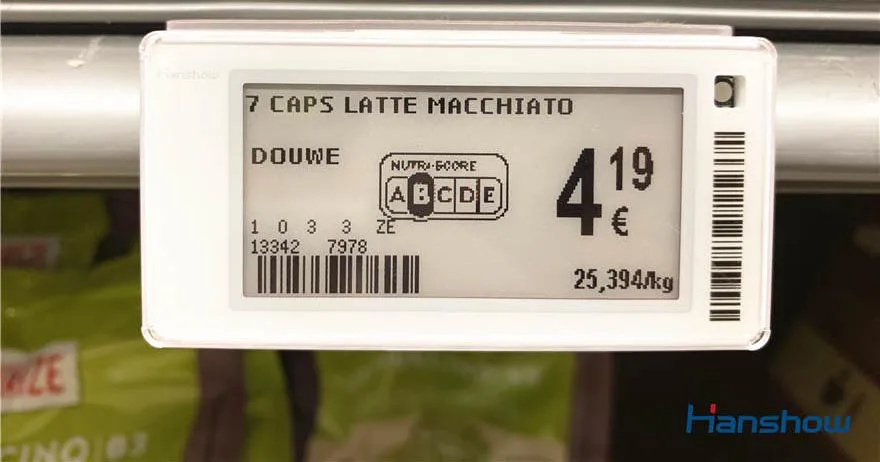
Leading global grocery retailers such as Ahold Delhaize and Auchan Retail have already accelerated the adoption of electronic shelf labels (ESLs), recognizing digital price tags as a foundation for scalable, accurate, and efficient in-store pricing. For supermarkets and grocery chains, the transition to electronic shelf labeling is no longer an experimental initiative—it is an essential step toward long-term operational resilience.
Why Traditional Pricing Models Struggle in Grocery Retail
Paper-based price tags create persistent operational friction across grocery stores.
Manually updating shelf prices can take store teams several days in a standard supermarket. During this time, discrepancies often emerge between shelf prices and checkout systems, leading to customer complaints and ultimately undermining consumer trust. In addition, manual processes make it difficult to execute frequent promotions or time-sensitive price adjustments, limiting a retailer’s ability to respond quickly to market conditions.
As grocery retail becomes more competitive and margin-sensitive, these inefficiencies accumulate and directly impact profitability.
How Electronic Shelf Labels Improve Grocery Operations
To address these challenges, many grocery retailers are adopting electronic shelf labels as part of a broader retail pricing automation strategy. Below are five ways ESL solutions help protect margins and reduce waste.
1. Faster, Automated Price Updates
Electronic shelf labels allow retailers to update prices across an entire store or chain within minutes. This capability supports timely promotions, end-of-day markdowns, and consistent pricing execution.
2. Smarter Fresh Item Management
Perishable products are a major source of margin erosion in grocery retail. With electronic shelf labeling, retailers can apply automated, time-based price adjustments as products approach expiration. Academic research from the UC San Diego Rady School of Management shows that such approaches can significantly reduce food waste while improving overall gross margins.
3. Improved Picking Efficiency with Visual Guidance
As online grocery orders increase, picking efficiency has become a critical KPI. ESL tags equipped with LED indicators enable a "pick-to-light" workflow. When an order is received, the relevant shelf label flashes, guiding staff directly to the correct product and reducing picking time.
4. Accurate Pricing and Compliance
Price accuracy is essential for customer trust and regulatory compliance. Digital price tags ensure synchronization between shelf prices, mobile apps, and checkout systems, creating a single, reliable source of pricing information throughout the store.
5. ESG and Sustainability Benefits
Replacing paper labels with electronic shelf labels reduces paper consumption, printing waste, and the use of chemical inks. It also minimizes inefficient manual workloads, allowing store staff to focus on customer service and fresh-food expertise.
A Practical Roadmap for ESL Implementation
To fully realize the benefits of electronic shelf labels, grocery retailers should follow a structured implementation approach.
Phase 1: Pilot and Category Selection
Start with departments that experience frequent price changes or high perishability, such as fresh produce, meat, and promotional categories.
Phase 2: Hardware and Infrastructure Planning
Select digital shelf labels designed for grocery environments, including freezer zones. Network planning is essential to ensure stable connectivity across large store footprints.
Phase 3: Backend System Integration
Successful rollouts require seamless integration between the ESL system, ERP platforms, and inventory management systems to ensure real-time data synchronization.
Phase 4: Scaling and KPI Measurement
After validating results during the pilot phase, retailers can scale deployment chain-wide and track performance using KPIs such as price accuracy, waste reduction, labor hours saved, and promotion execution speed.
Why Grocery Leaders Choose Hanshow Electronic Shelf Labels
Hanshow is a trusted partner for leading global grocery retailers, including Ahold Delhaize and Auchan Retail, delivering reliable electronic shelf label solutions at scale.
The Hanshow Nebular series offers up to 10 years of battery life (based on typical update frequencies) and an IP68 rating, making it suitable for demanding grocery environments, including freezer areas down to -30°C.
Hanshow’s proprietary HiLPC communication protocol supports high-density, low-power connectivity, enabling tens of thousands of price updates per hour per access point. This ensures fast and consistent price synchronization, even during large-scale promotional events.
Conclusion
For grocery retailers, the key question is no longer whether electronic shelf labels are worth considering, but how quickly digital shelf-edge transformation can be implemented to support accuracy, efficiency, and sustainable growth.
By adopting electronic shelf labels and modern digital price tags, grocers can reduce waste, improve operational efficiency, and strengthen their competitive position in an increasingly digital retail environment.